

Choosing a Bowl by Your Cat's Age and Build
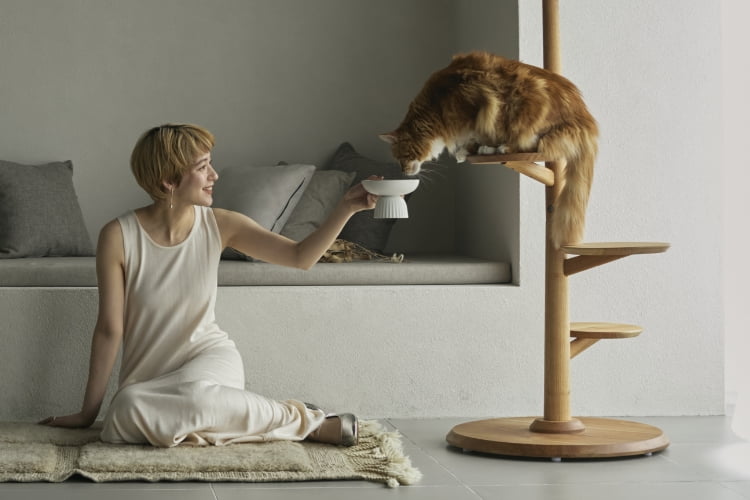
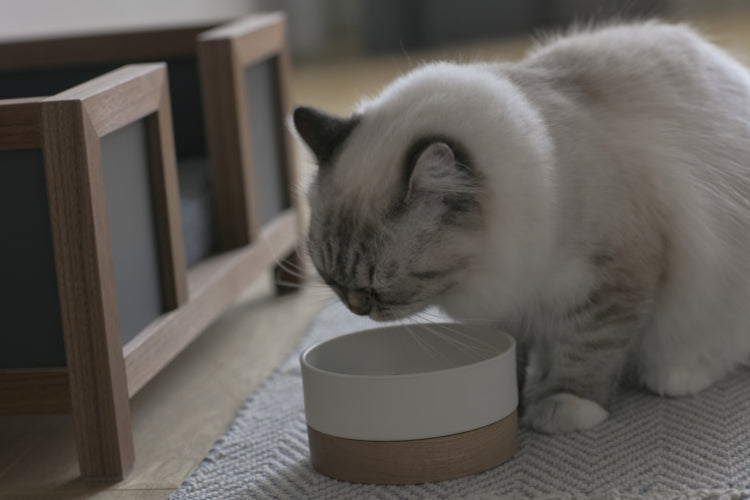
A low bowl set straight on the floor drops the neck sharply at every mouthful, which can strain the neck and joints and contribute to bringing food back up. Meet a bowl that fits the body, though, and a cat starts eating with surprising calm. The small back view of a cat at its food turns into something worth looking at. That is why &CAT has worked through height, shape and weight one at a time. Four food bowls, two water vessels, one treat plate. This article is about finding the one that fits your cat.

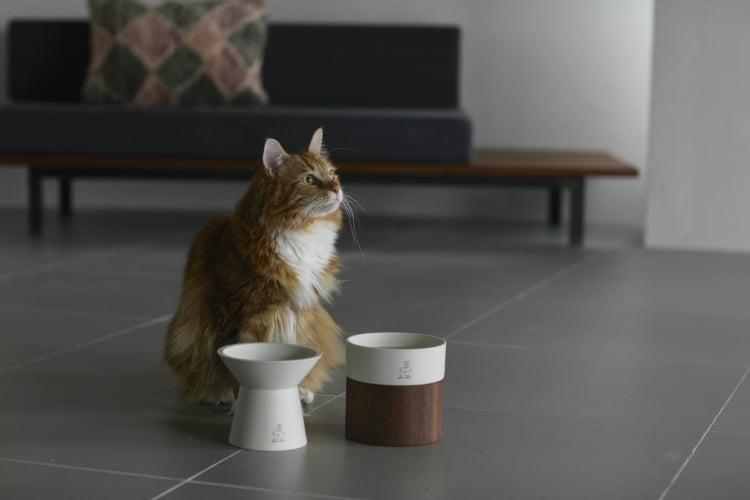
Different shapes, same foundations.
What every bowl shares is the material and the way it is made.
Mino ware, made by hand
Every piece is made in Gifu, home to 1,300 years of Mino ware. No two glazes settle the same way and no two firings colour alike, so each piece carries a face of its own.
Porcelain, so it stays clean
Porcelain barely absorbs moisture, which keeps odours from transferring. Microwave and dishwasher safe, so daily care is never a chore.
Japandi colours that settle into a room
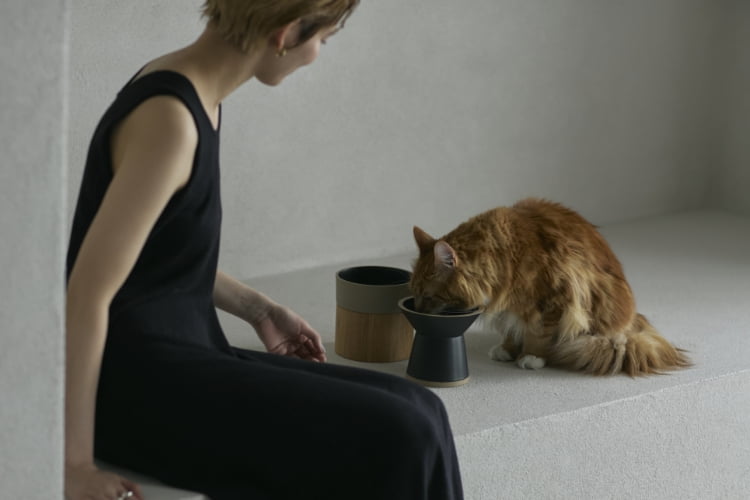
Colours where Japanese shadow meets Nordic softness — they blend with a cat's coat and with the room around it.
On that shared base, the differences in shape exist to fit differences in the cat's body. Three points make the choice simple.

Three points for choosing a bowl.
1. Height
A cat eats most easily when it does not have to drop its neck far. With the neck closer to parallel with the floor, the oesophagus stays straighter, which is said to help reduce bringing food back up. The right height changes with build and age, so &CAT bowls run from 6 cm to 15 cm.
2. Shape
Poor appetite, spilled food, kibble pawed out of the bowl to eat — one cause is said to be the stress of whiskers brushing the rim, known as whisker stress. A shallow, wide bowl keeps whiskers clear, so a cat can finish calmly. The shape of the face changes which bowl suits, too.
3. Weight
A bowl that is too light slides during a meal, and a cat cannot settle when the dish keeps moving. Whether you prioritise easy handling or steadiness depends on how you live.
Hold these three up against your own cat.

Choosing by age.
For a kitten, low and small.
While the body is still small, a bowl set too high makes eating harder, not easier. CHATON BOWL — 12 cm across and 6 cm high — quietly supports that small head pressed to the dish. When your cat grows, move to HM BOWL, the same form in a larger size: the scene stays, only the scale grows.
For a senior cat, height.
As the years add up, the act of lowering the neck becomes work in itself. A cat that has slowed down deserves an easy posture. CHALICE at 13 cm, HM BOWL at 14 cm and TATARA at 15 cm let a cat eat and drink without straining.

Choosing by build and breed.
For a large cat, height.
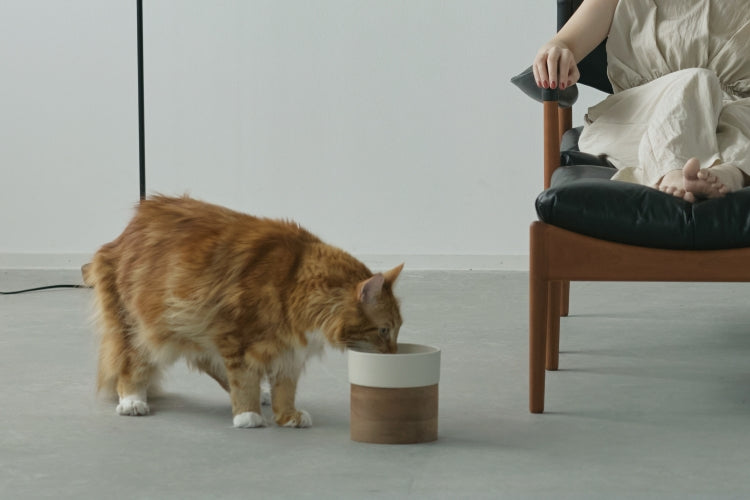
A tall cat like a Maine Coon has to stoop deeply over a low bowl. CHALICE, HM BOWL and TATARA keep the posture natural.
For short legs, keep it lower.
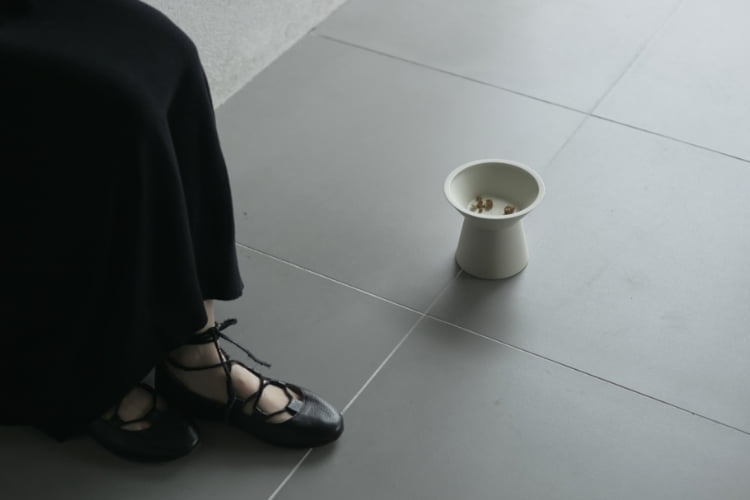
For a Munchkin or a Minuet, the 10.5 cm pedestal form of KANON is the right height, designed around shorter legs.
For a flat face, go wide.
A round-faced Persian or Exotic struggles to get into a deep bowl. KANON is 15 cm across and shallow, so whiskers stay clear of the rim and a cat eats without pushing its face into the dish.
For a small cat, something light.
MOG BOWL at 10 cm high is the standard that works for every breed — a good first plate when you are unsure.
→ See all food bowls

Choosing by how you live.
If bringing food back up concerns you, choose CHALICE, developed with a veterinarian. At 13 cm high, shallow and wide, it corrects the posture gently.
If you are out often, choose HM BOWL or TATARA, which hold a full 500 ml. You come home and there is still plenty of water in the bowl — that margin takes one worry out of the day. Both also take about 200 g of dry food.
For a multi-cat home, one large water vessel and one food plate per cat is the basic setup. HM BOWL or TATARA for water, and as many MOG BOWLs as you have cats, is the easiest combination to keep tidy.
If a robot vacuum lives with you, choose weight. CHALICE at about 780 g, HM BOWL at about 1,300 g and TATARA at about 1,700 g will not tip over easily on contact.
*If loss of appetite or vomiting continues, an illness may be behind it. When a change of bowl does not help, we recommend consulting your vet.
→ See all water bowls
The seven bowls at a glance.

Still deciding?
For a first plate, MOG BOWL suits every breed. If you would rather start small, OYATSU PLATE is an inexpensive way in.
And if you are setting up food and water together — CHALICE and HM BOWL as a set, in the same nine colours, comes to about 20% less than buying them separately. Two matching bowls side by side, and the cat's table settles on its own.
A bowl is something a cat touches every day. That is reason enough to match the shape to its body. &CAT bowls are here to support mealtimes with a cat, gently.


Browse by category
→ Food bowls
→ Water bowls